
Wildfire Smoke and Indoor Air Quality: Protecting Occupant Health
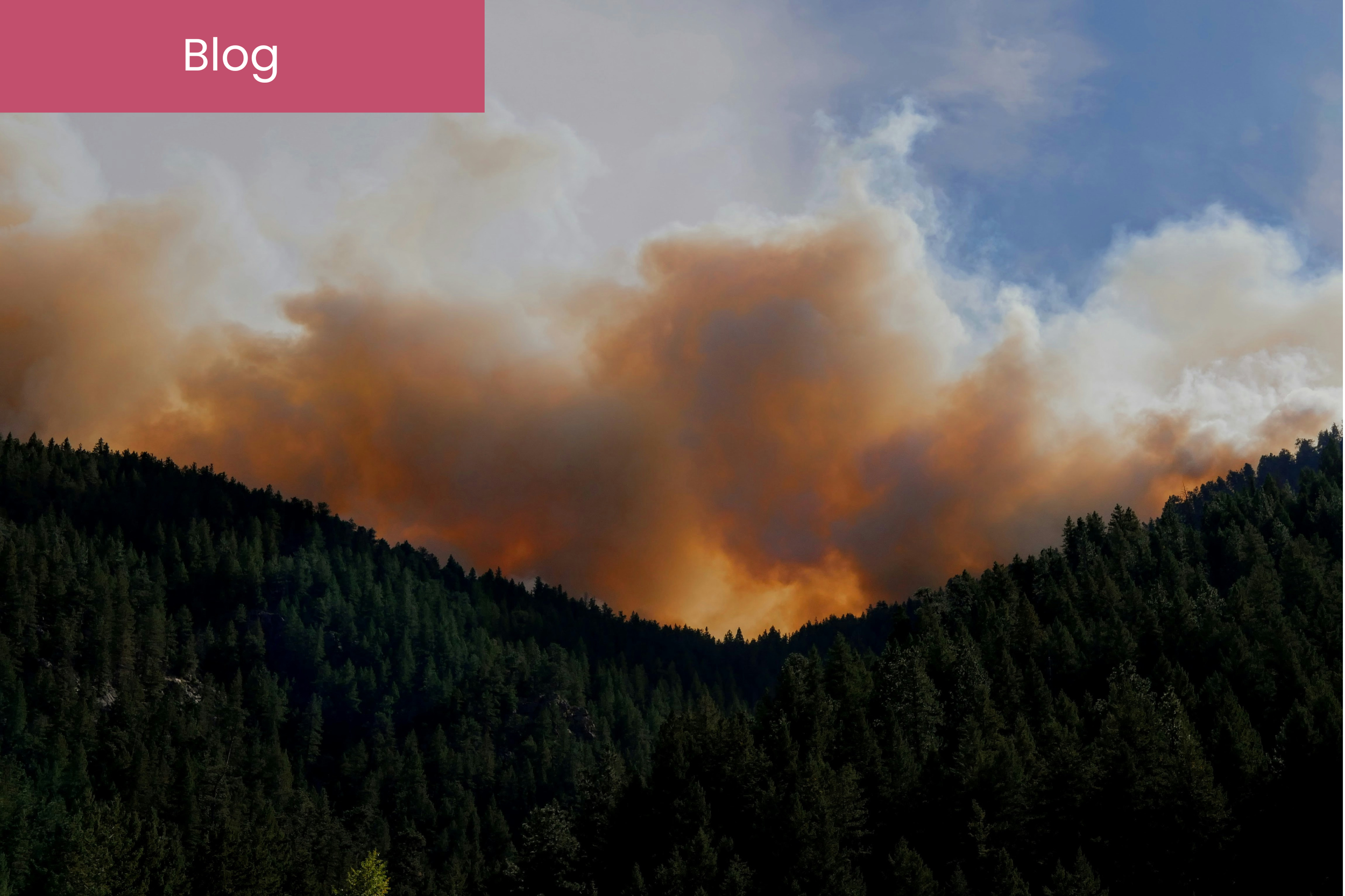
When wildfire smoke moves into your area, the standard advice is to head indoors, close the windows, and wait it out. It's a good first move. But "indoors" and "protected" aren't the same thing, and for building owners, school districts, and facilities teams, the difference shows up in occupant health.
Americans spend about 90% of their time indoors, according to the EPA, where the concentration of some pollutants runs two to five times higher than outside. So when smoke arrives, the people in your building aren't sealed off from it. They're breathing whatever your walls, HVAC system, and filters let through — and most teams have no way of knowing how much that is.
What wildfire smoke does to the body
Wildfire smoke is harmful because of what it carries: fine particulate matter, or PM2.5, particles small enough to reach deep into the lungs and cross into the bloodstream. The EPA links short-term smoke exposure to a range of effects, from eye and respiratory irritation to asthma attacks, worsened heart failure, and premature death. Smoke can also weaken the lungs' ability to clear out viruses and bacteria, and newer research connects exposure to preterm birth and short-term dips in cognitive performance.
The risk isn't shared evenly. The EPA identifies children, older adults, and people with asthma, heart disease, or lung disease as the most vulnerable — and those are exactly the people filling classrooms, offices, and public buildings during a smoke event.
We saw what that looks like at scale in 2023. When Canadian wildfire smoke spread across North America, a joint CDC and EPA analysis found asthma-related emergency room visits ran 17% higher than expected across 19 smoke-affected days. Roughly 100 million people in 16 states were placed under air quality alerts, and for a stretch, New York City and Chicago posted the worst air quality of any major cities in the world.
Being indoors doesn't make the risk disappear
Here's the part that catches building teams off guard: doing everything right doesn't fully solve it. A study of more than 1,400 buildings in California, published in PNAS, found that even when occupants slowed how fast outdoor smoke leaked in, the average indoor level of PM2.5 still nearly tripled during wildfire events.
Wildfire particles are built to get inside. Research comparing different pollution events found smoke had the highest indoor infiltration rate of all — 62% to 70% — because those tiny, far-traveled particles slip through the smallest gaps in a building. And they don't clear quickly. A multi-season study of public buildings in Missoula, Montana recorded up to four days in a row of indoor PM2.5 at "unhealthy" levels. For someone with asthma, four days of unhealthy air at their desk or in their classroom is a real health event, not a footnote.
Why your building's performance is the real variable
If smoke gets in no matter what, what separates a building that protects people from one that doesn't? It comes down to the building envelope, the HVAC system, and the filter — and above all, knowing how well those are working in the moment.
The filter alone makes a big difference. A campus study in Alberta found buildings running MERV-13 filters held an indoor-to-outdoor PM2.5 ratio near 0.12, compared to 0.28 for buildings on MERV-8 — more than double the exposure, in the same city, during the same event, decided by a filter rating.
The problem is that a filter's condition drifts over time. Dampers get left in the wrong position. A system that ran well last season may be quietly falling behind this one, and a quarterly inspection won't tell you what's happening on the day the sky turns orange. You can't protect people from something you can't see — and during a smoke event, seeing it has to mean right now.
How real-time monitoring protects occupant health
This is where continuous air quality monitoring earns its place. Watching outdoor air quality tells you what's heading toward the building. Watching indoor air quality tells you what's actually reaching the people inside. The gap between those two numbers is a live scorecard for your building's defenses.
In practice, that visibility changes the response in a few concrete ways:
Early warning. Automated alerts flag a dangerous rise in PM2.5 before occupants start reporting headaches or scratchy throats, so your team can adjust ventilation while it still makes a difference.
Proof your systems are working. A low indoor reading against a high outdoor one confirms your filtration is doing its job. A climbing indoor number tells you it isn't — before anyone gets sick.
Protection for the people who need it most. Schools can make defensible calls about recess and activities. Property teams can reassure tenants with data instead of hope. Construction managers can manage exposure for crews working out in it.
That's how resilience stops being a claim and becomes something you can show. Leading workplaces are already treating clean indoor air as something to verify, not assume — turning smoke season from a guessing game into a managed one.
Wildfire seasons are getting longer, and the smoke is reaching further every year. "Head indoors" will always be the first instruction. Making sure indoors is actually safe, and being able to prove it, is the part that's up to you.